Book Summary:
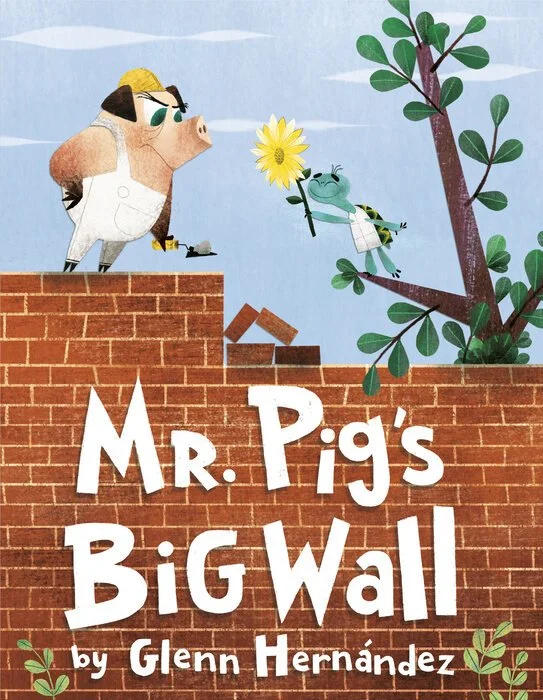
Mr. Pig's Big Wall tells the story of Hog, a bricklayer who enjoys spending time tending to his garden. When his neighbor, Little Tortoise, repeatedly interrupts him because she wants to play, Hog becomes frustrated and builds an enormous wall around his home to keep her out. However, the wall blocks the sunlight from reaching his garden, causing the plants he loves to wilt and die. With help from Little Tortoise, Hog eventually sees the world from a different perspective and realizes that building walls can isolate people and cause harm to those on both sides. The story offers a child-friendly entry point for discussing borders, immigration, exclusion, and the importance of relationships and community.
Recommended Questions:
How does building the wall affect Hog’s garden? What might this suggest about the unintended consequences of trying to exclude others?
How does Little Tortoise help Hog see things differently? What does this suggest about the importance of listening to perspectives different from our own?
What is the difference between creating boundaries to protect something and creating barriers that exclude others?
Walls can be made of bricks, but sometimes we build “invisible walls” with our words or actions. What does an invisible wall look like? (For example, ignoring someone or telling someone they can’t sit with you.)
At the end of the book, Hog and Tortoise garden together in the open light. How do neighbors or communities solve problems when they disagree about how to use a space?
What is a border? Why do people put up fences or borders around their homes? What is the difference between a fence with a gate and a giant wall with no doors?
In the book, Hog builds a wall to separate his space from Tortoise’s space. In the real world, countries use borders to show where one country ends and another begins. Why do you think countries create borders? How is a country’s border similar to or different from Hog’s wall?
Tortoise wanted to cross over or reach across the wall because she wanted connection, friendship, and eventually to share a healthy flower. In the real world, why do people leave their home countries to move to a new country? (Teachers can introduce reasons such as moving for safety, jobs, or to be with family.)
Tortoise had to use a helium balloon and a lot of creativity to send something over the wall because she couldn’t walk through it. What kinds of challenges or “walls” do you think real immigrants face when trying to move to a new country?
Hog’s garden needed sunlight from the outside world to survive. How do countries benefit when they welcome new people, ideas, and cultures?
NCSS Theme 10: Civic Ideals and Practices
Mr. Pig’s Big Wall invites students to consider how communities make decisions about inclusion, exclusion, and belonging. When Hog builds a wall to keep his neighbor out, students can explore how individual choices affect others and how barriers can harm relationships within a community. The story encourages discussion about the values of cooperation, respect, and welcoming others, while helping students consider what it means to be a responsible and caring community member.
Social Justice Anchor Standard 17: Responsibility to stand up to exclusion
Mr. Pig’s Big Wall shows how Hog’s decision to build a wall creates exclusion and prevents his neighbor from feeling welcome. The story encourages students to consider how it feels to be left out and how actions can create barriers between people. Students can reflect on their responsibility to stand up when others are excluded and identify ways they can help create a community where everyone feels welcomed, included, and valued
WA History 4: Analysis of contemporary issues and events
Mr. Pig’s Big Wall provides an opportunity for students to examine how the idea of walls and borders relates to historical and contemporary immigration policies. Hog’s decision to build a wall to keep his neighbor out can prompt students to consider why people and governments create barriers and how those decisions affect individuals, families, and communities. Students can connect the story to the history of immigration in the United States and explore how past and present policies shape people’s experiences of belonging, exclusion, and access to communities.
